Serious occurrences seldom provide you much warning. In workplaces around Noosa, the distinction between a scare and a disaster often comes down to whether somebody close by has the right emergency treatment skills and the confidence to utilize them.
Choosing a first aid course in Noosa for your group is not just a box to tick for compliance. The choice shapes how your staff will react in the first couple of minutes of a medical emergency situation, long before paramedics can reach your website from Tewantin, Noosaville or beyond. Throughout the years I have seen well trained groups manage seizures, heart attacks, beach-related injuries and severe allergies calmly and efficiently, and I have likewise seen what happens when training is poor or out of date.
What follows is a practical guide, grounded in how first aid training in Noosa really works on the ground, to help you select the ideal course and provider for your workplace.
Why getting Noosa first aid training right actually matters
The Noosa area mixes office-based companies, hospitality, tourist, building, outside recreation and marine activities. That mix brings a wide array of threats. An office near Noosa Junction faces different threats to a browse school at Noosa Main Beach, or a café along Hastings Street, or a building and construction website in Peregian Springs.
When something fails, the early reaction is shaped by three things:
Whether the workplace has enough trained first aiders. Whether their abilities match the types of events likely at that site. Whether their training was recent, sensible and delivered properly.
A quality Noosa emergency treatment course constructs real-world proficiency, not simply a certificate. Personnel should ignore emergency treatment and CPR courses in Noosa sensation that they could handle a heart attack, control extreme bleeding, handle an asthma attack or support a colleague with chest discomfort, not simply recite theory.
If you are selecting training for your work environment, your function is to connect your actual threats with a first aid course in Noosa that addresses them, provided by a supplier that comprehends both the national standards and the regional context.
Knowing your obligations under Queensland work health and wellness rules
Even if your primary focus is "doing the right thing", you still require to please legal requirements. In Queensland, work environment emergency treatment requirements sit under the Work Health and Safety Act and Regulations, supported by the First Aid in the Workplace Code of Practice.
The Code does not tell you to schedule a particular Noosa emergency treatment course, however it does set expectations about:
- how numerous qualified first aiders you require, based upon headcount and threat level the type and quantity of first aid equipment access to emergency treatment rooms for higher risk or larger workplaces the level of emergency treatment training appropriate to the hazards.
For lots of low risk workplaces, like little expert workplaces or retail areas, the basic "Offer First Aid" system (presently HLTAID011) plus regular CPR training in Noosa is generally suitable. Greater threat settings, such as workshops, building and construction, child care or special needs assistance, typically require extra or improved training.
Insurers and significant clients may impose additional requirements. Some tender documents, for example, define that employees must hold a present first aid certificate in Noosa that consists of CPR within the past 12 months, not just the basic three year emergency treatment refresher cycle.
Before you get in touch with a service provider, review:
- number of personnel per site and per shift work patterns, including nights and weekends where individuals work (office, street, water, automobiles, homes, building and construction websites) presence of susceptible populations such as children, elderly or individuals with disability.
This quick threat photo will assist you describe your needs clearly when you discuss options for first aid training in Noosa.
Understanding the main kinds of Noosa emergency treatment courses
Most respectable training companies in Noosa, including brands like Emergency treatment Pro Noosa and similar registered training organisations, structure their courses around nationally recognised systems. Knowing the common course types will help you match them to your needs.
Provide CPR (HLTAID009)
CPR training in Noosa focuses on cardiopulmonary resuscitation, use of an AED, and management of an unconscious casualty. It is usually a shorter cpr course in Noosa, often finished in a few hours, and must be revitalized every 12 months to maintain currency under many workplace policies.
Businesses typically run a cpr refresher course in Noosa each year for their existing very first aiders, especially in environments with greater heart threat or where emergency situation services access can be delayed.
Provide First Aid (HLTAID011)
This is the most common Noosa emergency treatment course for workplaces. It integrates CPR plus a broad range of abilities:
- managing bleeding, burns, shock and fractures dealing with asthma, anaphylaxis, seizures and diabetes handling ecological injuries such as heat exhaustion.
Most workplaces that say they want "emergency treatment and CPR Noosa" are successfully asking for HLTAID011, either as a public course or as group Noosa emergency treatment training on website. The emergency treatment certificate in Noosa for this unit is typically thought about valid for three years, with CPR refreshed yearly.
Childcare and education specific very first aid
If your organisation deals with kids, you will probably require the education and care specific first aid system (currently HLTAID012). This Noosa emergency treatment course constructs on standard first aid with much deeper content around paediatric conditions, asthma, anaphylaxis and kid particular scenarios.
Schools, early knowing centres, trip care and some sporting clubs around Noosa typically demand this level for certain functions under national guidelines for education and care services.
Remote or outside focused very first aid
Noosa's hinterland, routes and water-based services face various difficulties. If personnel hang around away from quick ambulance access, a standard Noosa first aid course might not be enough. In those cases, remote or wilderness emergency treatment training becomes relevant, concentrating on longer care times, improvised devices and environmental exposure.
If your people guide walkings near Noosa National Park, run eco-tours or work on remote residential or commercial properties, raise this clearly when you speak to a service provider. Not every emergency treatment course in Noosa will be suitable.
Mapping training to your particular workplace risks
Not every workplace in Noosa requires the same mix of emergency treatment and CPR courses. A sensible method is to map your main threat aspects, then check whether proposed Noosa emergency treatment courses actually cover them, rather of assuming a generic program is "close adequate".
Consider a couple of common local examples.
A workplace based organization near Noosa Civic might have a reasonably low injury danger, but personnel age, understood health conditions, and client interaction still matter. For many offices, a combination of Offer First Aid and routine cpr courses in Noosa, held either on site or at a regional training venue, suffices. If you have staff with severe allergic reactions, discuss addition of real life EpiPen practice and anaphylaxis scenarios.
A coffee shop or dining establishment on Hastings Street has higher threat of burns, cuts, slips and customer medical emergencies. In this case, you desire a Noosa first aid course that provides a lot of hands-on time with injury management, burns treatment, choking and asthma, not simply theory. It deserves asking whether the provider can customize the practical circumstances around food service incidents and peak service times.
Construction and trades around Noosa Heads or Cooroy face various top priorities once again: crush injuries, falls, electrical occurrences and interaction with plant. For these workers, I search for emergency treatment courses in Noosa that spend actual time on trauma management, spinal care principles, safe scene management and coordination with emergency services in loud or constrained sites.
For schools, surf lifesaving clubs and sporting organisations, paediatric emergency situations, spine preventative measures in water, concussion and high effort problems are common. Here, the combination of a proper emergency treatment and CPR course Noosa and specific surf or sports security training is ideal.
A good company will ask about your operations in this level of information. If the conversation feels generic and they do disappoint interest in your real threats, that is a warning sign.
Key aspects to compare between Noosa emergency treatment courses
When you begin calling or emailing companies of emergency treatment training in Noosa, you will discover that rates, durations and formats differ. The most affordable course or the fastest session is hardly ever the very best option for workplace competence.
Here is a compact list of what to compare.
Accreditation and compliance
Verify the organisation is a signed up training organisation (RTO) with an existing RTO number, providing nationally recognised systems such as HLTAID009 and HLTAID011. Ask how they keep content lined up with Australian Resuscitation Council (ARC) guidelines.
Trainer experience and regional knowledge
Excellent fitness instructors typically have a background in emergency situation nursing, paramedicine, military medic work or similar fields, combined with real teaching experience. In Noosa specifically, it assists if they understand regional realities such as beach-related occurrences, heat, local ambulance action patterns and typical tourist injuries.
Training format and time commitment
Numerous service providers offer blended emergency treatment course Noosa choices where theory is done online, followed by a shorter face to face practical session. Others run conventional complete day courses. Choose based on your personnel's learning style and attention span. Online-heavy formats can save time, but just if staff genuinely total the pre-work.
Practical focus and equipment
Ask how much of the session is hands-on. Search for cpr courses Noosa that include duplicated practice on adult and kid manikins, AED trainers and sensible situations. For complete emergency treatment Noosa courses, examine whether they supply training EpiPens, asthma spacers, bandaging materials and simulated wounds.
Assessment, support and documentation
Confirm the evaluation methods: written test, spoken questioning, useful demonstration or a mix. Examine how rapidly they provide an emergency treatment certificate Noosa after successful completion, and in what format (electronic, paper, or both). For organizations, a provider who can supply completion reports and reminder systems for expiries deserves extra.
Use this list as a prompt during your conversations, not as a kind to tick blindly. The way a supplier responds will inform you as much as their actual answers.
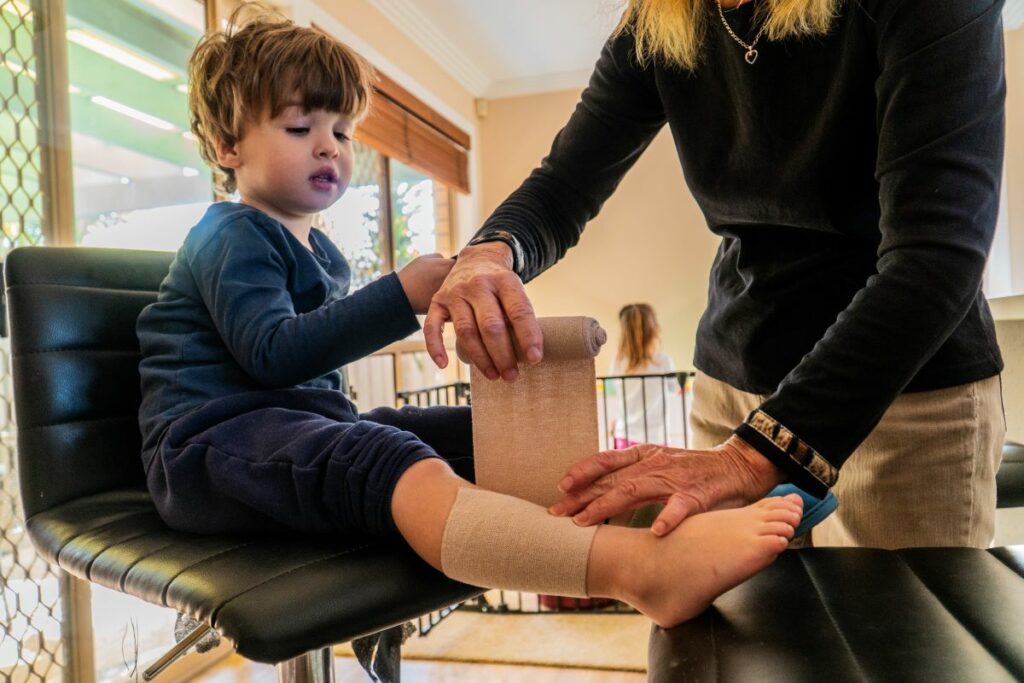
Choosing in between public classes and onsite Noosa emergency treatment training
Most organisations in Noosa choose between sending out personnel to public classes and bringing a fitness instructor on site. Both can work well; the right choice depends upon your situation.
Public Noosa first aid courses usually run on set dates at a training space in Noosaville, Noosa Junction or close-by residential areas. This works particularly well for:
- small organizations that only need one or two qualified people staff who missed the main training window and need to catch up individuals who desire a first aid course in Noosa for individual reasons, such as parenting, training or volunteering.
The strength of public courses is variety: your personnel satisfy people from other markets and see a variety of viewpoints. The disadvantage is less customizing to your specific dangers and some loss of efficiency due to take a trip and repaired schedules.
Onsite Noosa emergency treatment training, where the trainer concerns your work environment, is perfect when:
- you have a group of staff requiring the same emergency treatment and CPR course Noosa at once your workplace has unusual dangers that you want constructed into scenarios you want to walk through real reaction plans in your physical space.
I have seen onsite training pay off when teams run drills in their genuine workplaces, storage facilities or on boats at the marina, practicing how to call for help, where to discover the first aid package, and how to assist paramedics through confusing websites. It likewise makes it simpler for supervisors to observe and support staff as they practise.
The expense distinction between public and onsite courses is not always big when you consider travel, downtime and scheduling. When comparing first aid courses in Noosa, ask providers to estimate both options.
Reading in between the lines when suppliers describe their courses
Marketing language around Noosa first aid training can sound comparable initially glance. Every service provider claims to be thorough, practical and engaging. To identify genuine quality from buzzwords, listen for particular details.
When a provider describes their cpr training Noosa, do they talk about compression depth, rate and genuine feedback devices, or just say "hands-on practice"? For complete Noosa emergency treatment courses, can they explain how they adjust scenarios for hospitality versus building versus childcare?
Ask for an overview of the day with approximate timings. Search for a structure that alternates theory with practice, not a long block of PowerPoint before a hurried practical at the end. Ask how they accommodate individuals with physical constraints who may have a hard time kneeling for extended CPR practice, or staff whose English is not strong.
The best trainers will be happy to speak about how they manage worried participants, people who have actually formerly experienced injury, or staff who are initially sceptical about the value of first aid training in Noosa. They will emphasise building self-confidence as much as covering content.
How frequently must your team do emergency treatment and CPR in Noosa?
There is frequently confusion about refresher cycles. The basic pattern in Australia is:
- CPR (HLTAID009): refresh every 12 months. Provide Emergency treatment (HLTAID011): full renewal every 3 years, with CPR revitalized annually. Childcare specific emergency treatment (HLTAID012): likewise typically renewed every 3 years, with annual CPR.
Many offices turn this into an easy rule: anybody listed as a designated very first aider completes an emergency treatment and CPR course Noosa at first, then goes to a cpr refresher course Noosa every year and a full first aid certificate course Noosa first aid course once again every 3rd year.
Some higher threat markets, or organisations with strict client requirements, reduce these cycles or run extra circumstance sessions in between. I strongly recommend more regular practice if your staff seldom use their abilities in genuine occurrences. Even 2 short CPR refreshers in a year can make a big distinction to retention.
If you change your operations substantially, for example adding remote work, heavy plant or a great deal of public interaction, treat that as a trigger to evaluate whether your present emergency treatment courses Noosa are still the right fit.
Questions to ask before you schedule a Noosa first aid course
By the time you reach the point of choosing a provider, you need to have a rough sense of your risks, your numbers and your favored format. A brief, focused conversation will normally clarify the rest.
Here are practical questions that tend to separate strong companies from typical ones:
Which nationally identified units are consisted of, and are they current?
Have them define system codes such as HLTAID009, HLTAID011 or HLTAID012. Inspect that the Noosa emergency treatment course they propose matches what your industry standards expect.

How many individuals per fitness instructor, and what devices ratio do you use?
Crowded classes with too couple of manikins or EpiPen fitness instructors cause shallow abilities. Smaller group sizes, or a minimum of adequate equipment, are worth paying for.
Can you tailor scenarios or focus to our kind of work?
Describe two or three likely incidents for your work environment and see how the fitness instructor would include them. If they struggle to adapt, consider that a warning sign.
What is consisted of in the fee, and exist any extra costs?
Clarify location hire, travel within the Noosa area, certificates, online learning access and any rebooking or late modification charges. Inexpensive quotes often hide add-ons.
How do you support us after the course?
Excellent suppliers offer things like pointer e-mails before certificates end, posters, event report design templates, or quick refresher material. This matters in maintaining a strong emergency treatment culture, not just issuing a piece of paper.
These concerns are as much about hearing the company's attitude as gathering truths. If they react clearly, without lingo, and seem genuinely interested in your requirements, that is a favorable sign.
Steps to roll out efficient emergency treatment training in your Noosa workplace
Once you have actually picked a suitable Noosa first aid training company, take a little bit of additional time to execute the program effectively. That method, the financial investment becomes genuine ability instead of a folder of certificates.
Map roles to training requirements
Choose which positions must hold a complete Noosa first aid certificate, who needs only CPR Noosa, and where backup first aiders are required to cover leave and various shifts. Document these expectations in position descriptions or safety procedures.
Schedule with genuine operations in mind
Prevent running all emergency treatment and CPR courses Noosa on the very same day if that would leave you short of coverage. Stagger sessions throughout dates or times so you still have some experienced individuals on duty while others attend.
Prepare personnel before the course
Let individuals understand why they are going to, how it connects to real incidents you have seen, and what you expect afterwards. Encourage them to finish any online pre-work for combined Noosa first aid courses well before the practical session.
Follow up instantly after training
In the week after the course, walk through your first aid sets, AED locations and emergency situation treatments with newly trained personnel. Ask what felt clear and what they still feel unsure about. This debrief consolidates understanding while it is fresh.
Build a simple tracking and refresher plan
Utilize a spreadsheet, HR system or safety software application to record who holds which level of emergency treatment certificate Noosa, and their expiry dates. Set up yearly cpr courses Noosa and three-yearly complete emergency treatment courses well ahead of time so you are not scrambling when a certificate lapses.
Done correctly, this approach suggests first aid ends up being a living part of how your office operates, not a forgotten line in an induction checklist.
Bringing all of it together for your Noosa workplace
Choosing the best first aid course Noosa is less about picking a brand and more about thoughtful alignment. You are trying to find an RTO that:
- delivers identified first aid and cpr training Noosa that matches your hazards uses experienced trainers who understand local conditions provides enough hands-on practice to construct real skill issues clear, timely paperwork and supports your continuous program.
Tie that to a simple internal system that keeps an eye on who is trained, when refreshers are due, and how emergency treatment suits your broader security planning.
The next time somebody in your group grabs an EpiPen in a coffee shop, starts CPR on a colleague in a storage facility, or handles a heat-exhausted traveler outside your shop, the quality of the Noosa emergency treatment course you selected will matter. Thoughtful decisions today can shape those vital first minutes tomorrow.

Nationally Recognised First Aid Courses Noosa Locals Trust! First Aid Pro is one of Noosa’s leading providers of accredited CPR and first aid courses. Established in 2010, our nationally registered training organisation (RTO) has equipped over 3 million Australians with essential life-saving skills through our experienced team of 110+ expert trainers. Conveniently servicing Noosa and the Sunshine Coast region, we provide top-quality, nationally accredited CPR and first aid training sessions tailored to your needs, whether for workplace requirements, career advancement, or personal safety. From childcare-specific first aid training to advanced first aid and resuscitation courses, we’ve got you covered. First Aid Pro – First Aid Course Noosa Noosa Conference Centre 73 Hilton Terrace Noosaville QLD 4566 Australia Phone: (08) 7120 2570 Secure your Noosa first aid course or CPR training with us and build the confidence to handle emergencies with a trusted Noosa first aid provider. Take the first step towards becoming a skilled and capable first aider with First Aid Pro Noosa today.
Location & Venue Details Our First Aid Pro Noosa courses are held at Noosa Conference Centre, 73 Hilton Terrace, Noosaville QLD 4566, conveniently located in the heart of Noosaville. This modern and well-equipped venue provides a professional and comfortable training environment ideal for first aid, CPR, and childcare first aid courses. It’s the perfect location for participants travelling from Noosaville, Noosa Heads, Tewantin, Sunrise Beach, and surrounding Sunshine Coast suburbs. Situated close to the Noosa River, the venue is near popular local landmarks including Noosa Marina, Noosa Civic Shopping Centre, Noosa National Park, and Hastings Street. The surrounding area offers a variety of cafés, restaurants, and takeaway outlets—perfect for enjoying lunch or coffee before or after your course. With easy access to Noosa Main Beach and nearby riverside parks, it’s also a great place to relax before or after your training. Training is conducted in spacious, air-conditioned rooms within Noosa Conference Centre, equipped with high-quality first aid and CPR training equipment and comfortable seating. The venue provides convenient onsite parking and nearby street parking for participants attending the course. The site is fully accessible, offering step-free entry and accessible restroom facilities, ensuring a smooth and inclusive training experience for all learners.